
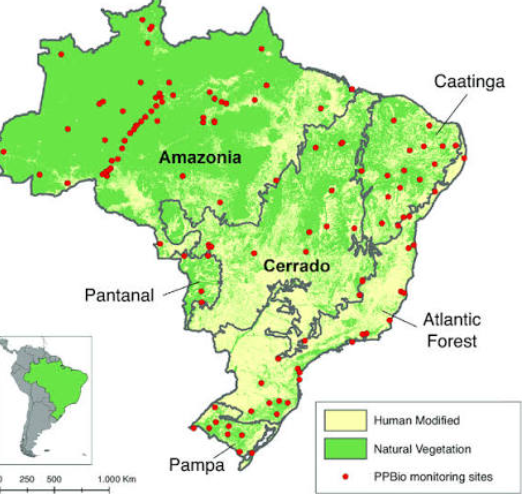
Brazil is home to an astonishing array of biodiversity, making it one of the world’s richest regions in terms of flora and fauna. Approximately 60% of the Amazon rainforest lies within Brazil, contributing significantly to its status as a megadiverse country. In this post, we’ll dive into the hotspot distribution of Brazil’s biodiversity and understand its significance.
1. Understanding Megadiversity in Brazil
Brazil is classified as a megadiverse country, which means it hosts an extraordinary amount of biological variety. With over 50,000 species of plants and around 600 species of mammals, its ecosystems are teeming with life. Notably, the Atlantic Forest and the Amazon rainforest are critical areas that showcase this wealth, housing species that are found nowhere else on Earth.
The concept of megadiversity goes beyond just the number of species. It also reflects the unique ecological interactions and evolutionary processes occurring in Brazil’s various habitats. However, distinct biomes such as the Cerrado and Pantanal also contribute to its diversity, making Brazil a geographical treasure trove for scientists and ecologists.
-
- Learn about specific species endemic to Brazil.
-
- Research the different biomes that contribute to megadiversity.
-
- Understand the importance of preserving these unique ecosystems.
-
- Get involved in community-led conservation initiatives.
2. Biodiversity Hotspots and Their Distribution
Biodiversity hotspots are regions that are both rich in species and significantly threatened. In Brazil, there are several key hotspots including the Amazon, Atlantic Forest, and the Cerrado, each presenting its own unique landscapes, climate, and species. The Amazon, for example, is critical for global carbon storage and is a vital ingredient in the fight against climate change.
On the other hand, the Atlantic Forest has seen significant deforestation, affecting numerous endemic species. It’s a reminder that while these hotspots are incredibly rich, they are also precarious. Conservation efforts, including protected areas and ecological corridors, are essential for maintaining the biodiversity found in these hotspots.
-
- Identify key biodiversity hotspots in Brazil.
-
- Explore different conservation policies and their effectiveness.
-
- Support NGOs that focus on these hotspots.
-
- Use mapping tools to visualize changes in biodiversity.
3. The Role of Mapping in Biodiversity Conservation
Mapping the distribution of biodiversity is essential for understanding and conserving Brazil’s unique ecosystems. Geographic Information Systems (GIS) allow scientists to record, analyze, and share spatial data about species distribution and habitat loss. These maps help identify areas that require conservation efforts the most, enabling more focused action.
Moreover, advancements in technology have made it easier to create interactive maps that can engage the public and raise awareness. Citizen science projects also benefit from mapping efforts, allowing everyday citizens to contribute data and observations from their local environments.
-
- Explore online mapping platforms focused on Brazilian biodiversity.
-
- Participate in citizen science initiatives.
-
- Utilize mapping tools for educational purposes.
-
- Spread awareness through social media about biodiversity hotspots.
4. Challenges and Opportunities for Biodiversity in Brazil
While Brazil boasts enviable biodiversity, it faces numerous challenges including deforestation, climate change, and habitat fragmentation. The Amazon rainforest is especially affected, with large areas cleared for agriculture, logging, and infrastructure. These activities not only threaten species but also impact the local communities that depend on the forest.
Nevertheless, there are opportunities for restoration and sustainable management of resources. Initiatives focused on agroforestry, sustainable fishing, and ecotourism can balance economic growth with the need to protect biodiversity. Engaging local communities in these efforts is crucial as they often have the most at stake.
-
- Advocate for policies supporting sustainable practices.
-
- Volunteer for local conservation programs.
-
- Invest in sustainable products and businesses.
-
- Educate others about the importance of biodiversity.
5. How You Can Make a Difference
Your actions can contribute to the conservation of Brazil’s unique biodiversity. Whether it’s through individual choices or community involvement, every little bit helps. Choose to support organizations that focus on ecosystem protection, and consider eco-friendly options in your daily life.
Additionally, spreading awareness about Brazil’s biological wealth can inspire others to care. Educate friends and family about the importance of biodiversity and the delicate balance it maintains in our world. Small conversations can lead to significant change.
-
- Adopt sustainable practices in your daily life.
-
- Share information about Brazil’s biodiversity on social media.
-
- Encourage local schools to teach about conservation.
-
- Participate in community forums about environmental issues.
In conclusion, Brazil’s biodiversity is not just a national treasure; it is a global imperative that requires collective action for its preservation. By staying informed and getting involved, you can contribute to the protection of this rich ecological heritage. Start today by seeking out local initiatives or online communities dedicated to biodiversity!