
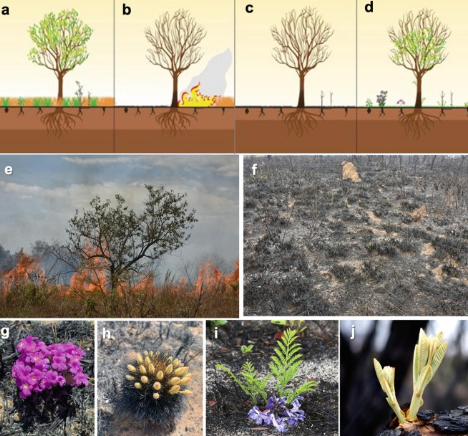
The Cerrado, a vast tropical savanna in Brazil, is known for its rich biodiversity and unique ecosystems. Fire plays a crucial role in its ecology, facilitating natural regeneration and maintaining the biological balance of this exceptional environment.
1. The Role of Fire in the Cerrado Ecosystem
Fire is not just a destructive force in the Cerrado; it is an essential component of its ecosystem. Many native plant species have evolved to depend on periodic fires to regenerate and flourish. These fires clear out old and woody growth, allowing sunlight to reach the ground, which promotes the growth of new herbaceous plants, necessary for countless animal species.
For example, the Brazilian Pequi tree relies on fire to open its tough seed shells, thus facilitating germination. Regular fires help in recycling nutrients back into the soil, which enhances fertility. As a result, some areas of the Cerrado may experience a remarkable diversity of plant and animal life post-fire, making it a dynamic ecological region.
-
- Understand the natural fire cycles in the Cerrado.
-
- Keep track of seasonal fire patterns and their ecological impacts.
-
- Consult local conservation efforts focused on maintaining fire as a natural process.
-
- Support initiatives aimed at educating about the benefits of fire in savanna ecosystems.
2. Natural Regeneration Mechanisms
The Cerrado ecosystem showcases exceptional natural regeneration mechanisms following fire events. Many species have adapted to recover quickly, either through resprouting or seed germination. The exposure of soil to heat often leads to a flush of new growth, dramatically increasing biodiversity.
For instance, several grasses can sprout from an extensive root system, allowing them to bounce back efficiently after being burned. Moreover, some plants have seeds that remain dormant in the soil, only germinating after being activated by fire. This relationship between fire and regeneration is crucial for maintaining the ecological integrity of the Cerrado.
-
- Identify plant species that thrive post-fire in your area.
-
- Learn about seed dormancy and germination related to fire exposure.
-
- Maintain a diverse landscape that promotes varied regrowth.
-
- Monitor and document regeneration patterns in burned areas.
3. Challenges and Conservation Efforts
While fire plays a beneficial role in the Cerrado, human-induced changes pose significant challenges. Agricultural expansion, deforestation, and climate change disrupt natural fire regimes, potentially leading to detrimental ecological outcomes. Fires that occur outside their natural cycle can damage sensitive species, leading to biodiversity loss.
Conservation efforts are underway to manage fire responsibly while maximizing its benefits. These include educating local communities about the importance of controlled burns and implementing sustainable land-use practices. Protecting this unique ecology requires a concerted effort to balance development with conservation.
-
- Participate in local conservation initiatives focused on the Cerrado.
-
- Advocate for responsible land-use policies that respect natural fire regimes.
-
- Educate others on the importance of fire for regeneration.
-
- Collaborate with local NGOs to restore areas affected by human impact.
In conclusion, understanding the fire ecology and natural regeneration processes in the Cerrado can lead to more sustainable management of this precious ecosystem. By becoming informed advocates and participants in conservation efforts, we can help preserve this unique environment for future generations.