
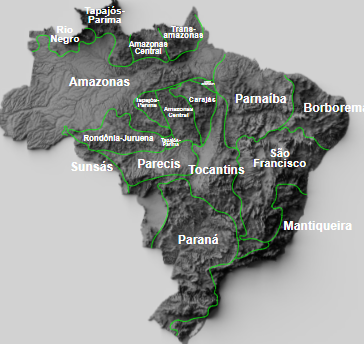
Brazil’s geological framework is strikingly different from that of many other countries, mainly due to its tectonic stability and well-preserved ancient shield geology. Unlike regions prone to frequent earthquakes and volcanic activity, Brazil is situated on the stable South American tectonic plate, making it a fascinating subject for geologists and enthusiasts alike.
1. Understanding Tectonic Stability in Brazil
Brazil’s tectonic stability is a result of its location within the South American tectonic plate, far removed from the active boundaries where tectonic plates collide or diverge. Unlike countries along the Pacific Ring of Fire, which are regularly rocked by earthquakes and volcanic eruptions, Brazil experiences significantly fewer geological disturbances. This stability provides a unique opportunity for the study and preservation of ancient geological formations and ecosystems.
The relatively low seismic activity in Brazil doesn’t mean that it is completely devoid of geological events. Occasional earthquakes do occur, but they are generally of low magnitude and infrequent. The last significant earthquake, measuring 7.5 on the Richter scale, was recorded in 1955 in the northwest region. Geologically, this stability allows scientists to focus on deciphering Brazil’s ancient history observed in its rock formations.
-
- Research the geological features of your area to understand its stability.
-
- Consider the types of natural disasters that are common in your region.
-
- Follow local geological studies to stay informed on seismic activity.
-
- Engage with local geologists or attend seminars to learn about ancient geological formations.
2. The Brazilian Shield: A Glimpse into Ancient Geology
The Brazilian Shield is a vast geological formation that covers a significant part of Brazil’s landmass, characterized by its ancient rocks and minerals. Formed during the Precambrian era, the Brazilian Shield is home to some of the oldest rocks on Earth, which date back over 3 billion years. These rocks contain a wealth of information about early Earth’s tectonic processes and climatic conditions.
Most notably, the shield comprises granites, gneisses, and schists, which were formed through intense geological processes, including metamorphism and igneous activity. Notable locations include the Serra do Mar and Serra da Mantiqueira ranges, which contain these ancient metamorphic rocks. Researchers study these formations not just for their age, but also for insights into the geological history and environmental conditions of early Earth.
-
- Visit geological formations to witness the ancient rocks yourself.
-
- Engage with geologists who specialize in shield geology.
-
- Read geological surveys and reports published by Brazilian universities.
-
- Participate in geological field trips or educational programs.
3. Economic and Environmental Importance of the Ancient Shield
The Brazilian Shield is not only significant for its geological history; it also plays a vital role in the country’s economy and environmental health. Rich in natural resources, this region is known for its deposits of gold, iron ore, and diamonds, which are essential to both local and national economies. The mining industry benefits from these deposits, but it also raises concerns regarding sustainability and environmental impact.
Moreover, the shield area is vital for biodiversity and poses challenges in terms of conservation. The ancient geological formations and various ecosystems provide habitats for unique flora and fauna. Ongoing studies are crucial to understanding the ecological balance and ensuring the sustainable extraction of natural resources while preserving these vital areas.
-
- Support initiatives aimed at sustainable mining practices.
-
- Advocate for the protection of biodiversity in ancient geological areas.
-
- Stay informed about regulations regarding land use and natural resource management.
-
- Encourage eco-tourism that promotes appreciation for geological features.
In summary, Brazil’s tectonic stability and its ancient shield geology present a fascinating intersection between natural history and modern economics. Understanding these features not only enriches our knowledge of Earth’s history but also fosters responsible engagement with its resources. For those interested in exploring this topic further, consider reaching out to geology professionals or participating in local geological studies.