
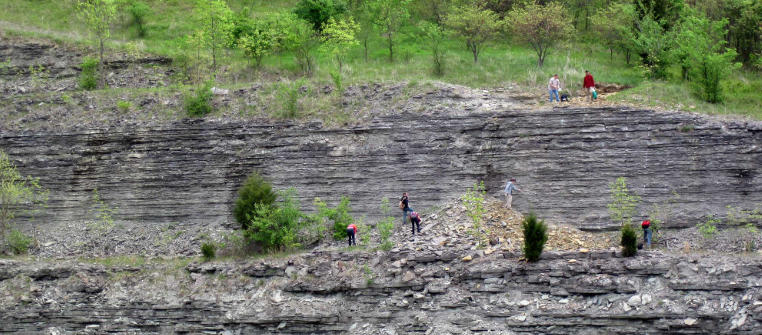
The Appalachian Mountains boast a rich geological history, primarily characterized by their beautiful and diverse sedimentary rocks. Understanding these formations not only enhances our appreciation of the region’s natural beauty but also informs us about Earth’s past environments and processes. Let’s dive into the fascinating world of Appalachian sedimentary rocks.
Formation Processes of Sedimentary Rocks
Sedimentary rocks in the Appalachian region are the result of a variety of geological processes that have unfolded over millions of years. These rocks originate from sediments that accumulate over time, formed from weathered materials, organic matter, and mineral particles. Erosion plays a significant role in breaking down existing rocks, while deposition occurs when these materials settle in layers. Over time, lithification takes place, where pressure and minerals transform loose sediments into solid rock. This intricate cycle reveals a timeline of Earth’s evolution, showcasing everything from ancient riverbeds to marine environments.
Key Types of Sedimentary Rocks
The Appalachian Mountains feature an array of sedimentary rock types, including sandstone, shale, and limestone. Sandstone, often characterized by its grainy texture, forms from consolidated sand particles and can tell tales of ancient deserts or river systems. Shale, on the other hand, is a fine-grained rock composed of clay particles, often representing quieter, low-energy environments like lakes or deep ocean floors. Finally, limestone generally develops from the accumulation of shell fragments and marine organisms, showcasing the region’s past underwater landscapes. Each type provides a glimpse into the environmental conditions that once existed in this majestic range and reveals much about our planet’s geological history.
Fossils and Historical Significance
One of the most captivating aspects of Appalachian sedimentary rocks is their fossil content. Many of these rocks are home to numerous fossils, offering a window into prehistoric life. Fossils found within sandstone and shale can include everything from fish scales and plant imprints to the remains of ancient reptiles. These fossilized remains not only enrich our understanding of biodiversity but also serve as important indicators for scientists studying climate change and earth’s biological evolution. The Appalachian region is thus not only a geological marvel but also an essential site for paleontological research.
In conclusion, the sedimentary rocks of the Appalachian Mountains hold remarkable stories and insights about our planet’s past. Whether for academic interest or for pure curiosity, exploring these formations can deepen our understanding of Earth’s intricate processes. If you’re intrigued by geology, consider visiting the Appalachians to witness these incredible rock formations in person or dive deeper into the subject through books, documentaries, and local natural history exhibits.