
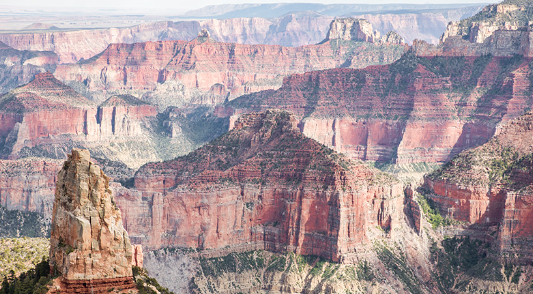
The Sedimentary Layers of the Grand Canyon
The Grand Canyon is more than just a breathtaking view; it’s a geological marvel that reveals nearly two billion years of Earth’s history. The stunning array of sedimentary rock layers tells a complex story about ancient environments, climate changes, and the forces that shaped our planet. Understanding these layers enriches our appreciation of this natural wonder and offers insights into Earth’s past.
The Oldest Layers: Vishnu Schist and Zoroaster Granite
At the very bottom of the Grand Canyon lies the ancient Vishnu Schist and Zoroaster Granite. These layers date back around 1.7 billion years, making them some of the oldest rocks on the planet. Composed mainly of metamorphic rocks, they provide a glimpse into a time when the region was vastly different—characterized by volcanic activity and intense heat. Studying these ancient formations allows geologists to reconstruct Earth’s early history, providing context for the subsequent layers that followed.
The Middle Layers: Redwall Limestone and Muav Limestone
Rising above the older formations are the remarkable Redwall and Muav Limestone layers, dating back approximately 340 million years. The Redwall Limestone is particularly striking, boasting rich, fossilized remains of marine life, which indicates that this area was once covered by a vast sea. The limestone layers serve as a testament to the changing environments over millions of years, showcasing a time when warm, shallow seas dominated the landscape. These layers are not only captivating to paleontologists but also essential for understanding the geological processes that shaped the Grand Canyon.
The Youngest Layers: Kaibab Limestone and Toroweap Formation
At the top of the Grand Canyon, the youngest layers include the Kaibab Limestone and the Toroweap Formation, which date back from 270 to 250 million years ago. The Kaibab Limestone is known for its lighter coloration and distinct topography, capped with a flat surface that creates the beautiful rim of the canyon today. These formations highlight the transition to more recent geological events, including the rise of the Colorado Plateau. This layer provides crucial insights into how erosion and sedimentation have gradually sculpted the iconic canyon we see today.
Conclusion
The sedimentary layers of the Grand Canyon are a striking testament to Earth’s dynamic history, offering rich insights into ancient environments and geological processes. Whether you’re a geology enthusiast or a casual visitor, taking the time to explore these layers enhances your appreciation of this natural wonder. If you’re curious to learn more about the Grand Canyon, consider visiting local geological exhibits or joining a guided tour to experience these magnificent rock formations up close.