
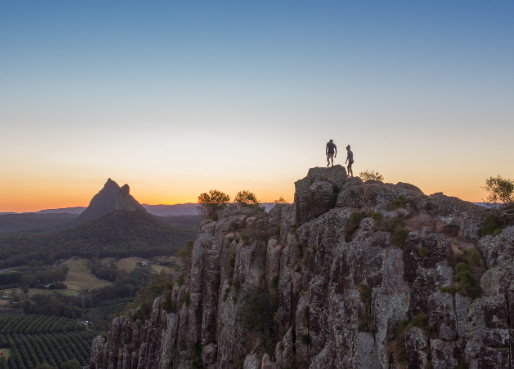
The Glass House Mountains, located in Queensland, Australia, captivate visitors with their striking formations and natural beauty. Understanding their formation provides insight into geological processes and the region’s rich history, making it a valuable exploration for both nature enthusiasts and those interested in Earth sciences.
Geological Origins
The Glass House Mountains were formed through volcanic activity millions of years ago. These unique peaks are remnants of ancient volcanoes that emerged during the volcanic activity of the Tertiary period, approximately 25 to 27 million years ago. As molten lava cooled, it solidified into hard basalt rock, while softer surrounding materials eroded away over time, leaving behind the distinctive shapes we see today.
Changes Over Time
Since their formation, the Glass House Mountains have undergone significant weathering and erosion. Climate factors like rain, wind, and temperature fluctuations played crucial roles in sculpting the landscapes. The gradual but relentless process of erosion has resulted in the current series of peaks and valleys, each exhibiting different features and characteristics influenced by the original volcanic activity.
Cultural Significance
Beyond their geological appeal, the Glass House Mountains hold cultural significance, particularly for the Indigenous peoples of the region. These mountains have been a part of their lore and traditions for generations, symbolizing stories, spiritual connections, and a sense of belonging to the land. Today, they continue to attract visitors not only for their natural beauty but also for the rich cultural narratives embedded in the landscape.
Exploring the Glass House Mountains offers more than just breathtaking views; it’s an opportunity to connect with nature and history. Whether you’re a geology enthusiast, a hiker, or simply someone seeking adventure, consider delving deeper into the wonders of this remarkable region. Happy exploring!