
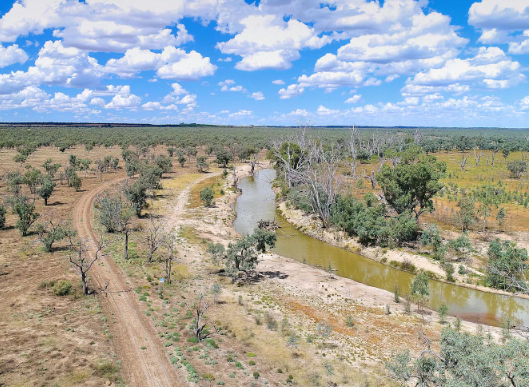
Introduction: A Hidden Hydrological Legacy
Beneath the vast, sun-scorched expanse of Australia’s Outback lies a network of ancient river systems that once shaped the continent’s interior. Today, these rivers no longer flow across the surface; instead, they exist as buried channels, fossilized drainage networks, and groundwater reservoirs. Their discovery has significantly advanced our understanding of Australia’s geological evolution, paleoclimate, and water resources. These ancient systems reveal a time when the Outback was far wetter and more dynamic than the arid landscape we see today.
Geological Origins of the Ancient Rivers
The origins of these subterranean river systems date back tens of millions of years, particularly during the Paleogene and Neogene periods. During these epochs, Australia experienced a markedly different climate, characterized by higher rainfall and extensive river networks. As tectonic shifts gradually altered the continent’s topography, drainage patterns evolved, and many rivers were redirected, diminished, or completely buried by sediment.
Over time, layers of sand, clay, and alluvium accumulated, preserving the outlines of these rivers beneath the surface. These paleochannels can now be detected using geophysical methods such as seismic imaging, satellite remote sensing, and borehole data. The result is a detailed reconstruction of ancient hydrological systems that once transported water, sediments, and nutrients across the continent.
Climate Change and Desertification
One of the most significant factors contributing to the disappearance of these rivers was long-term climate change. As Australia drifted northward and global climatic conditions shifted, the continent became increasingly arid. Rainfall decreased, evaporation rates increased, and permanent rivers gave way to ephemeral streams.
This transition to aridity, particularly over the last 15 million years, led to the gradual desiccation of surface water systems. Rivers that once flowed continuously became seasonal or vanished entirely. Wind-blown sediments and dune systems further obscured these channels, effectively sealing them beneath the desert surface. The modern Outback, therefore, represents the end stage of a prolonged process of desertification.
Subsurface Water and Aquifers
Although these ancient rivers no longer flow above ground, they continue to play a crucial role in Australia’s hydrology. Many paleochannels now function as aquifers, storing significant quantities of groundwater. These underground reservoirs are often more permeable than surrounding rock formations, making them important sources of water in otherwise dry regions.
In particular, the Great Artesian Basin—one of the largest groundwater systems in the world—owes part of its structure to ancient river deposits. Water stored in these systems can be thousands to millions of years old, offering a unique record of past climatic conditions. For remote communities, agriculture, and mining operations, these aquifers provide a vital, though finite, water supply.
Scientific and Environmental Significance
The study of ancient river systems beneath the Outback has broad implications for multiple scientific disciplines. In geology, these systems help reconstruct past landscapes and tectonic movements. In climatology, they provide evidence of historical climate variability, aiding predictions of future environmental change.
Additionally, these buried rivers are important for biodiversity and ecosystem management. Even in arid regions, subsurface moisture can support unique plant and microbial life. Understanding the distribution of these hidden water sources is therefore essential for conservation efforts and sustainable land use.
Technological Advances in Discovery
Recent advancements in technology have revolutionized the exploration of these ancient systems. Satellite imagery, particularly from radar and multispectral sensors, allows scientists to identify subtle surface features that indicate buried नदी channels. Airborne geophysical surveys and ground-penetrating radar further refine these findings, enabling precise mapping of subsurface structures.
Moreover, isotopic analysis of groundwater provides insights into the age and origin of water within these systems. By combining multiple scientific approaches, researchers can construct a comprehensive picture of how these rivers formed, evolved, and ultimately disappeared.
Conclusion: A Landscape Shaped by Water
The ancient river systems beneath the Outback serve as a powerful reminder that even the driest landscapes have dynamic and water-rich histories. These hidden networks not only shaped Australia’s geological past but continue to influence its present through groundwater resources and ecological processes.
As climate change continues to affect global environments, studying these ancient systems becomes increasingly important. They offer valuable lessons about resilience, transformation, and the long-term interplay between water and land. Beneath the red sands of the Outback lies a forgotten world of rivers—silent, buried, yet still profoundly influential.