
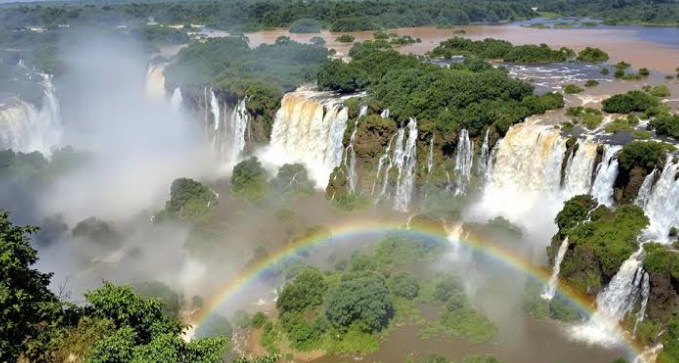
Nestled between Argentina and Brazil, Iguazu Falls is a breathtaking natural wonder boasting unparalleled beauty and unique geographical significance. This majestic waterfall system not only captivates visitors with its stunning vistas but also serves as a vital point of cultural and ecological intersection between two countries.
1. The Magnificence of Iguazu Falls
Iguazu Falls is composed of approximately 275 individual waterfalls, stretching nearly 1.7 miles (2.7 kilometers) across a lush, subtropical landscape. The falls are fed by the Iguazu River, which ultimately joins the Paraná River. What sets this waterfall apart is its unique semi-circular cliff formation, with the largest single drop, known as the Devil’s Throat (Garganta del Diablo), plunging over 270 feet (82 meters) into the abyss below.
This cascading water attracts millions of visitors each year, making it one of the most popular destinations in South America. Both Brazil and Argentina have established national parks to protect this UNESCO World Heritage Site, allowing tourists to experience it from different viewpoints. The Brazilian side offers panoramic views, while the Argentine side allows for closer encounters and walking trails that lead you right up to the heart of the falls.
-
- Plan your visit during the dry season for better views.
-
- Wear comfortable shoes for extensive walking on trails.
-
- Bring a camera to capture stunning photographs.
-
- Consider visiting the Brazilian side for a wider perspective.
2. Border Geography Between Brazil and Argentina
The border between Brazil and Argentina has a unique geographical layout, particularly at Iguazu Falls. The two countries are separated by a series of rivers and called ‘triple frontier’ with Paraguay located nearby. This geographical significance not only serves as a natural border but also as a cultural melting pot where languages, traditions, and people from three nations converge.
This border geography influences wildlife, too. The surrounding national parks protect diverse ecosystems unique to this region. Species such as jaguars, capybaras, and numerous exotic birds thrive in this biodiverse area, attracting wildlife enthusiasts and nature lovers alike. Additionally, the proximity of these parks facilitates cross-border conservation efforts aimed at preserving the natural beauty and ecological integrity of Iguazu Falls.
-
- Learn about the different ecosystems in the area.
-
- Take guided tours to understand the cultural aspects of the border.
-
- Respect the wildlife regulations set by both national parks.
-
- Carry identification while visiting border areas.
3. Experiencing Iguazu Falls: Activities and Tips
When visiting Iguazu Falls, a variety of activities await adventure seekers and nature lovers. Options include boat rides that take you close to the falls for an exhilarating experience, hiking through well-marked trails within the national parks, or even taking a helicopter tour for a bird’s-eye view of the cascading waters. Each experience provides a unique perspective on the falls and the surrounding landscape.
For those who enjoy history and culture, the area also features several attractions, such as historical tributes and local markets. These experiences enrich your understanding of the local residents’ lives and the significance of this UNESCO site in regional history. Regardless of the activities you choose, planning your itinerary wisely will ensure you get the most out of your visit.
-
- Book excursions in advance, especially during peak season.
-
- Bring waterproof clothing for boat excursions.
-
- Try local cuisine at nearby restaurants.
-
- Check weather forecasts for the best visiting times.
4. Conservation and The Future of Iguazu Falls
The preservation of Iguazu Falls and its surroundings is critical for future generations. Both Brazilian and Argentine governments have implemented conservation efforts aimed at protecting this natural wonder. These include limited tourist access to sensitive areas, the establishment of wildlife reserves, and continuous restoration projects to address any environmental damages.
Collaboration between the two countries is essential for maintaining the ecological integrity of the region. Various NGOs and environmental groups work to raise awareness about conservation issues, engage local communities, and promote sustainable tourism practices. As a visitor, there are ways you can contribute to these efforts as well, enhancing the delicate balance between tourism and environmental protection.
-
- Support local conservation initiatives by donating or volunteering.
-
- Choose eco-friendly tours and accommodations.
-
- Educate yourself on conservation history before your visit.
-
- Observe and follow guidelines for minimizing your ecological impact.
Iguazu Falls is not just a spectacular sight; it’s also a vital geographical and ecological landmark shared between Brazil and Argentina. By visiting this natural wonder, you not only immerse yourself in its beauty but also contribute to vital conservation efforts. Prepare for an unforgettable journey and consider how you can protect such a remarkable place for future generations.