
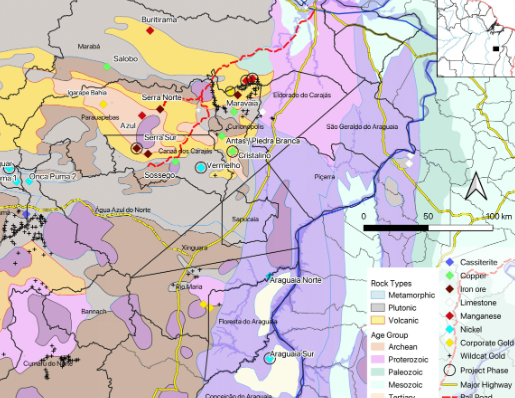
Brazil is renowned not only for its vibrant culture and rich biodiversity but also for its remarkable geological resources. The country boasts a variety of mineral-rich regions that contribute significantly to both its economy and global markets. This post will explore these regions, their geological characteristics, and the distribution of key minerals.
1. The Amazonian Basin
The Amazonian Basin is one of the most significant geological regions in Brazil, stretching across a vast area filled with diverse minerals. Major geological formations such as the Amazon River sedimentary basin host minerals like gold and iron ore. The basin is rich in alluvial deposits, particularly in regions where rivers have eroded mineral-rich rocks, leading to lucrative gold mining activities.
Mining operations in the Amazonian Basin face both opportunities and challenges. While gold mining has flourished, concerns over environmental impacts are paramount. Deforestation and the loss of biodiversity highlight the need for sustainable practices in addressing the demand for these precious minerals.
-
- Understand the relevance of sustainable mining practices.
-
- Support local organizations that aim to protect the Amazon.
-
- Research techniques used to reduce environmental impact in mining.
-
- Stay informed about legal regulations surrounding Amazonian mining.
2. The Iron Quadrangle
The Iron Quadrangle, located in the state of Minas Gerais, is world-famous for its rich deposits of iron ore. This region contains some of the largest iron mines globally, including the renowned Carajás mine. Minerals extracted from this area are primarily used in steel production, making Brazil a key player in the global iron ore market.
In addition to iron, the Iron Quadrangle also hosts significant reserves of manganese and gold. The intricate geological formations in this area consist of metamorphosed rocks that create ideal conditions for mineralization. However, the region’s mining activities have raised questions about sustainability and the long-term ecological footprint of large-scale exploitation.
-
- Explore the significance of iron ore in the global economy.
-
- Visit local museums to learn about the geological history of the Iron Quadrangle.
-
- Engage with local communities involved in mining for better socioeconomic understanding.
-
- Promote awareness regarding sustainable practices in mining operations.
3. The Central Plateau
The Central Plateau is another important geological zone, characterized by its expansive mineral deposits, including bauxite, limestone, and quartz. Bauxite, the primary ore of aluminum, is a major export commodity for Brazil, catering to global demands for aluminum products. The geological formations in this area are predominantly sedimentary, which lends itself to diverse mineral extraction.
This region is not only significant for its resource distribution but also for its geological features. The Central Plateau boasts plateaus and valleys formed over millions of years, making it an area of interest for geological studies and environmental research. Additionally, the sustainable management of resources in this region remains critical, emphasizing the need for balance between economic growth and ecological preservation.
-
- Investigate the role of bauxite in aluminum production.
-
- Learn about the geological formations of the Central Plateau.
-
- Support initiatives focused on sustainable mining practices.
-
- Participate in local conservation programs to protect the region’s ecosystem.
4. The Southern Mineral Belt
The Southern Mineral Belt is known for its rich mineral deposits, including coal, copper, and rare earth elements. Regions like Santa Catarina and Rio Grande do Sul exemplify this fertile geological area. The presence of these minerals not only boosts local economies but also contributes to industry needs beyond Brazil’s borders.
Rare earth elements, in particular, have gained importance due to their essential roles in modern technology. The Southern Mineral Belt encourages innovation in mining techniques and promotes research on sustainable development to ensure that these resources are extracted responsibly. This region’s unique geological composition also provides a wide array of research opportunities for geologists and environmental scientists.
-
- Research the importance of rare earth elements in technology.
-
- Understand the impacts of coal mining on local ecosystems.
-
- Stay informed about technological advancements in mining.
-
- Advocate for responsible mining practices in your community.
Brazil’s rich and diverse mineral resources are integral to its economy and global standing in various industries. As awareness grows about sustainable practices, it is crucial for individuals and organizations to support initiatives that balance resource extraction with environmental stewardship. By engaging with local communities and understanding the complexities involved, we can contribute to a more sustainable future for Brazil’s geological legacy.