
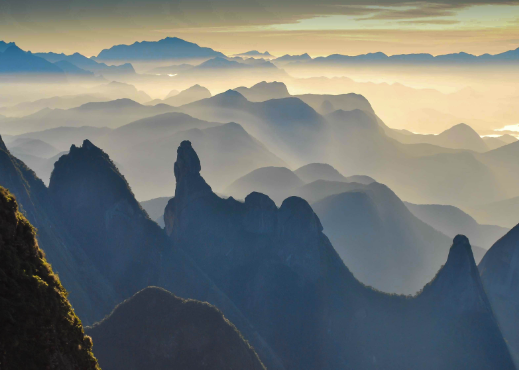
The Serra do Mar mountain range is one of Brazil’s most impressive geological features, stretching along the southeastern coast. This stunning range offers a captivating blend of natural beauty and complex geological history that spans millions of years.
1. Origins of the Serra do Mar
The Serra do Mar originated primarily during the break-up of the supercontinent Gondwana around 180 million years ago. This event led to the formation of the Atlantic Ocean, leaving rift valleys and volcanic activity in its wake. The geological story of the Serra do Mar begins as large blocks of continental crust were uplifted, creating the prominent peaks we see today.
Additionally, the range is underpinned by a series of basaltic lava flows that solidified during periods of volcanic activity. This volcanic origin contributed significantly to the diverse rock formations observed in the region today, including various types of sedimentary and metamorphic rocks. The combination of uplifting and erosion shaped the dramatic topography that attracts scientists and adventurers alike.
-
- Study the geological history of Gondwana for better context.
-
- Explore regional geology in local museums or geological parks.
-
- Consider guided tours with geologists to understand rock formations better.
-
- Take notes on the different types of rocks you observe.
2. Erosion and Evolution of the Range
Erosion has played a crucial role in sculpting the Serra do Mar. As the Andes Mountains in South America rose to the west, the Serra do Mar experienced significant erosion from wind and water, leading to the formation of deep valleys and steep cliffs. These erosive processes are responsible for the range’s lush valleys and hard rock faces.
Moreover, the Serra do Mar is continuously evolving due to both natural and human influences. Rivers flowing through the range carve out pathways, further modifying the terrain, while human activities like deforestation have added to the complexity by altering drainage patterns in the region. The interplay of these forces makes the Serra do Mar not only a breathtaking sight but also a dynamic geological landscape.
-
- Visit national parks in the area to see erosion in action.
-
- Track changes in the landscape over seasons or years.
-
- Participate in conservation efforts to protect the range’s biodiversity.
-
- Learn about the flora and fauna that depend on the unique geological features.
3. Biodiversity and Ecological Importance
The Serra do Mar mountain range is home to a rich array of biodiversity, offering habitats for countless species, many of which are endemic to the region. The unique geology creates a variety of microclimates, supporting different ecosystems ranging from tropical rainforests to moist highland forests. This variation is crucial for maintaining ecological balance and preserving species diversity.
This biodiversity is not only significant for ecological health but also has economic implications, particularly in areas like ecotourism and sustainable forestry. Local communities often rely on these resources, making it essential to balance development with conservation efforts. Understanding the geological significance of the region can inform practices that protect this rich heritage for future generations.
-
- Engage in birdwatching or wildlife observation tours.
-
- Support local ecotourism initiatives that promote sustainable practices.
-
- Educate yourself about local species and their habitats.
-
- Advocate for policies that protect biodiversity in the area.
4. The Human Element in Geological Study
Humans have long inhabited the Serra do Mar region, and their influence on its geological and ecological landscape cannot be overstated. Archaeological findings indicate that indigenous communities have lived in harmony with the range for thousands of years, utilizing its resources sustainably. Nowadays, researchers study the area’s geology to better understand not only the past but also potential threats like climate change.
Local universities and research institutions are increasingly focused on the geology of the Serra do Mar, collaborating with universities from around the world. Their investigations aim to find sustainable solutions to the challenges faced by both the environment and the communities that rely on it. This research aids in raising awareness and promoting sustainable development in a region under constant threat from urbanization.
-
- Visit local universities to learn about ongoing research projects.
-
- Participate in academic seminars or public lectures on geology and ecology.
-
- Engage with local communities to learn about their history and relationship with the land.
-
- Consider volunteering for research projects or conservation work.
The Serra do Mar mountain range is not just a stunning geological formation; it is a vital ecosystem with intricate relationships between its geology, ecology, and human inhabitants. Understanding its geological formation history offers insights that can guide future actions for sustainability and conservation. Taking steps to educate and engage yourself can contribute positively to preserving this natural wonder.