
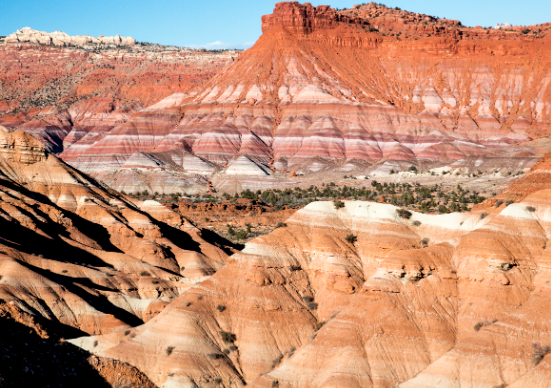
The Erosion Patterns in the Grand Staircase
The Grand Staircase in southern Utah is a breathtaking geological wonder, defined by its stunning sedimentary rock formations and intricate erosion patterns. Understanding these patterns is not only fascinating but also essential for appreciating the region’s geological history. This article explores the erosion processes that shape this remarkable landscape and what they reveal about the Earth’s past.
The Formation of the Staircase
The Grand Staircase is characterized by a series of large steps that are formed by different layers of sedimentary rock, each representing a unique period in geological history. As erosion occurs, softer rock layers crumble away, exposing the harder layers beneath. This process creates the distinct “steps” of the staircase, showcasing colorful layers of rock, each with its own age and composition. The dramatic contrast in colors and textures not only captivates the eyes but also tells a story about ancient environments, ranging from river deltas to ocean floors.
Climate’s Influence on Erosion
Climate plays a crucial role in how erosion unfolds in the Grand Staircase. In the arid environment of southern Utah, varying precipitation patterns lead to different erosion styles. When heavy rains occur, they can lead to flash floods that wash away soil and rock rapidly, carving gullies into the landscape. Conversely, long periods of drought allow for wind erosion, sculpting the rock formations into unique shapes. These processes work together to continuously reshape the land, illustrating the ever-changing nature of the environment.
Fossils and Erosion Insights
The erosion patterns in the Grand Staircase do more than just create beautiful landscapes; they also unveil valuable insights into ancient life. Fossils embedded in the sedimentary layers offer a glimpse into ecosystems long gone. As erosion exposes these layers, paleontologists can study the fossils, gaining information about prehistoric climates, flora, and fauna in the region. This wealth of data provides clues to how life on Earth has evolved, making the Grand Staircase not just a visual feast, but also a crucial site for scientific research.
In Conclusion
The erosion patterns of the Grand Staircase are a significant part of what makes this natural monument so intriguing. From the way the landscape was shaped by climatic forces to the stories told by ancient fossils, there is much to explore in this geological marvel. Whether you are a science enthusiast, a nature lover, or just curious about the world around you, visiting the Grand Staircase offers an opportunity to witness the Earth’s history firsthand. Encourage yourself to delve deeper into this remarkable location, and who knows what stories you’ll uncover!