
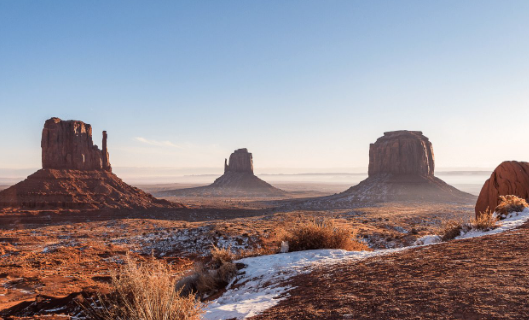
How Monument Valley’s Buttes Formed
Monument Valley, a breathtaking landscape on the border of Arizona and Utah, captivates visitors with its iconic buttes and mesas. Understanding the geological history behind these stunning formations provides a deeper appreciation of their beauty and significance. Let’s dive into the fascinating processes that shaped these natural wonders over millions of years.
The Role of Erosion in Shaping the Landscape
Erosion plays a crucial role in the formation of the buttes and mesas in Monument Valley. Water, wind, and ice continuously wear away the rock layers, sculpting the landscape. Initially, a vast, flat expanse of sedimentary rock was deposited over 200 million years ago. Over time, wind and rain eroded the softer rock around the harder layers, leaving behind the striking vertical formations we see today. The contrast between the towering buttes and the flat valley floor creates a captivating scene that highlights nature’s artistry.
Sedimentary Layers Tell a Story
The buttes and mesas in Monument Valley are primarily composed of sedimentary rock, which reveals the area’s geological history. As rivers and oceans once flooded the region, they carried sediments that eventually solidified into layers of sandstone, shale, and limestone. Each layer tells a story of the environment at that time, from ancient seas to desert landscapes. The deep red and orange hues of the rock formations, which are rich in iron oxide, further enhance their visual appeal. When you visit, you’re not just looking at mountains; you’re gazing at millions of years of Earth’s history captured in stone.
Tectonic Activity Sparks Creation
While erosion is a major player in shaping Monument Valley, tectonic activity also contributes significantly. The region is part of the Colorado Plateau, which has experienced uplift due to tectonic forces over millions of years. This geological uplift raised the sedimentary layers, creating a more prominent landscape of buttes and mesas. As the land elevated, natural forces began to sculpt the rock into the formations we see today. Understanding these tectonic processes gives us insight into how such impressive and dramatic features can arise from seemingly endless flatland.
Conclusion
Monument Valley’s buttes and mesas are more than just picturesque landscapes; they are the result of intricate geological processes that have occurred over eons. By appreciating the factors of erosion, sedimentary layering, and tectonic movements, we can gain a greater respect for the forces that shape our world. If you’re inspired by the stunning beauty of Monument Valley, consider planning a visit or exploring more about the geology that makes it so unique. Dive deeper into Earth’s natural wonders; every landscape has a story waiting to be uncovered!