
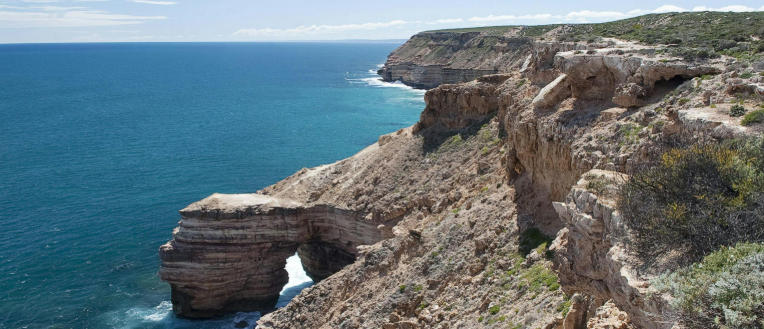
Australia boasts some of the world’s most spectacular and diverse coastal cliffs. From Western Australia’s red sandstone cliffs to the famous Twelve Apostles of the Great Ocean Road, and Tasmania’s steep basalt columns, these cliffs are not only landscape wonders but also natural archives recording Earth’s evolutionary history. They have withstood hundreds of millions of years of plate collisions, wave erosion, and climate change, ultimately presenting their breathtaking forms today.
Ancient Geological Roots
Australia’s coastal landscape dates back to the ancient Precambrian period. The continental basement, composed of extremely hard gneiss and granite, was uplifted to the surface through long periods of tectonic activity. As plates gradually drifted, Australia separated from the former supercontinent Gondwana, forming steep coastlines under the long-term erosion of the open ocean. For example, the Kimberley Cliffs in Western Australia, composed of sedimentary rocks from 1.8 billion years ago, are important evidence for studying paleoenvironmental changes.
Coastal Wonders Shaped by Sedimentation
Many coastal cliffs in southeastern Australia are composed of sandstone and limestone, rocks originating from sediments in the ancient ocean. Over time, sedimentary layers were compacted and solidified, forming hard limestone plateaus. The Twelve Apostles of the Great Ocean Road are an example of this; originally connected to the mainland, they were gradually fragmented into individual pillars by weathering and wave erosion. Today, they continue to slowly recede at a rate of about 2 centimeters per year, a typical example of dynamic geomorphic evolution.
Cliff Cliffs Left by Volcanic Activity
Tasmania’s coastal cliffs present a different geological landscape. Many of these cliffs are composed of columnar joints in cooled basalt or diabase, a columnar structure originating from the contraction of magma after ancient volcanic eruptions. The famous Tasmanian columnar basalt cliffs not only bear witness to intense volcanic activity but also serve as unique geological landmarks worldwide.
Waves and Weathering: The Power of Constant Sculpture
No matter how solid the rock, the final form of Australian cliffs is inseparable from the long-term erosion of the sea. The powerful waves of the Southern Ocean bring tremendous impact, continuously pounding the base of the cliffs, forming sea caves, sea platforms, and sea arches. Weathering is equally important; temperature variations, salt crystallization, and wind erosion collectively shape the complex surface textures.
Conclusion: An Ever-Changing Natural Heritage
Australia’s coastal cliffs are not only tourist attractions but also crucial windows into Earth’s history. From ancient sedimentary rocks and volcanic remains to modern marine erosion, these cliffs record the long-term interaction between continental movement, climate change, and oceanic forces. As future climate conditions evolve, these magnificent natural structures will continue to change, revealing more unsolved geological stories to the world.