
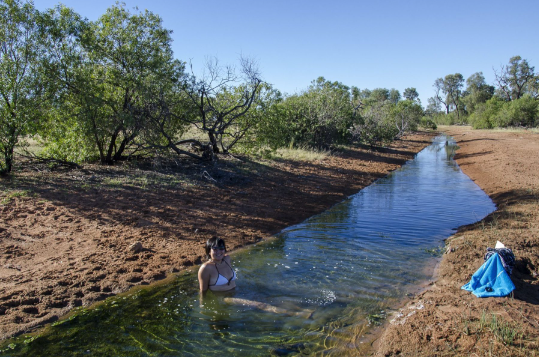
The Great Artesian Basin (GAB) is one of the largest underground freshwater resources in the world, spanning several Australian states. Understanding how this vast aquifer was formed not only illuminates its significance for the region’s ecology and agriculture but also highlights the geological processes that have shaped much of the Australian landscape over millions of years. Exploring the formation of the GAB reveals the complex interplay between geology, hydrology, and climate change throughout history.
Geological Origins
The formation of the Great Artesian Basin began around 100 million years ago during the Cretaceous period. This era saw the accumulation of sediments in ancient river systems and deltas, which subsequently compressed and solidified into sandstone, claystone, and limestone. This geological layering created a vast, porous rock structure capable of storing significant quantities of groundwater. The layers of impermeable rock that cap the aquifer also play a crucial role, trapping water and preventing it from escaping, thereby maintaining the basin’s water levels.
Hydrological Development
Over millions of years, a series of climatic shifts and tectonic activities influenced the hydrology of the Great Artesian Basin. During wetter periods, rainwater and surface water infiltrated the porous aquifer, recharging it and ensuring a steady supply of groundwater. The distribution of recharge areas is vital, as they help regulate the flow of water throughout the basin. Drilling and human activity have further impacted water levels, but understanding the natural hydrological cycle remains essential for sustainable management of this critical resource.
Human Impact and Conservation
Since European settlement, the Great Artesian Basin has been tapped extensively for agricultural and domestic use, leading to concerns about over-extraction. Despite its vastness, the GAB is not infinite; concerns about sustainability and potential depletion have prompted government and community initiatives aimed at conservation. Efforts such as recycling water, capturing storm runoff, and improved irrigation techniques are crucial for maintaining the basin’s health. Raising awareness and advocating for responsible water use will ensure that this invaluable resource continues to support future generations.
In conclusion, the Great Artesian Basin is a remarkable testament to the Earth’s geological history and hydrological complexity. Understanding its formation and ongoing conservation is essential for anyone interested in sustainable resource management. Dive deeper into this fascinating topic and explore ways to support the preservation of such a vital environmental treasure!